ACT as a Brief Intervention
Learn how to do ACT effectively in short sessions using an approach better known as FACT: Focused Acceptance & Commitment Therapy.
Learn how to do ACT effectively in short sessions using an approach better known as FACT: Focused Acceptance & Commitment Therapy.

Are you facing the ever-growing challenge of how to optimize client outcomes with as few treatment sessions as possible? Around the globe, the demand for brief therapy is rapidly growing, but fortunately, Acceptance & Commitment Therapy (ACT) is well suited to a brief intervention format.
In this advanced-level 6-week online course, you’ll learn how to do ACT effectively in anything from 1 to 6 sessions of 20 to 30 minutes each, using an approach better known as FACT: Focused Acceptance & Commitment Therapy. FACT is a brief but powerful behavioural intervention approach, pioneered by Kirk Strosahl and Patricia Robinson, and widely used in the USA and Europe.
Effectively Optimize Client Outcomes
This engaging online course, 8 hours in total, rolled out over 6 weeks, will take you step-by-step through the practice and principles of FACT.
The FACT model is ideal for anyone who wants to do ACT more efficiently, especially for practitioners in time-limited settings, including primary care, short in-patient stays, school or university counselling, prisons, EAPs, and crisis intervention services.
You’ll learn how to use FACT as brief intervention for depression, anxiety disorders, addictions, stress, medical problems and a wide range of other common clinical issues.
Unique and Engaging Learning Experience
FACT is a radically different approach to therapy, which will give you a wealth of new ideas and effective strategies.
In this 6-week online course you will:
Discover exciting new research about the surprisingly high effectiveness of brief therapy interventions, and learn how to apply this approach with your clients and patients
Observe demonstrations of the specific clinical techniques that make up the FACT approach
Learn the art of focused interviewing skills
Learn how to do rapid case formulation and treatment targeting
Learn how to do an effective ACT intervention in as little as 5 to 10 minutes
Each week, Dr. Russ Harris will take you step-by-step through the core principles of FACT, supported by instructional videos, engaging animations, videos of therapy sessions, written materials, audio recordings, client handouts and worksheets, and interactive quizzes to test your learnings as you go.
To complete your interactive experience, the course also includes a fully supported forum where you can ask questions week by week and share your experiences with Russ and your peers from around the world.
Who This Course is For
This is an advanced level course, which assumes at least a beginners-level knowledge of ACT. Before enrolling, you must do at least one of the following:
Attend an introductory level 2-day ACT workshop (with any trainer).
Complete our online ACT for Beginners course.
Thoroughly work through a beginners-level ACT textbook from start to end, such as ACT Made Simple or Learning ACT.
This course is open to any professional who works with physical or psychological health. This includes therapists, coaches, counselors, physicians, nurses, psychologists, psychiatrists, social workers, physios, dietitians, occupational therapists, youth workers, BCBAs, speech therapists, and any other type of health professional - as well as students and researchers in these fields.
Enrollments
We're happy to help if you can't attend the current intake. Please contact our customer service once your purchase is finalized, and we can enroll you in the intake of your choice.
There are 8 CE/CME hours available (see Learner Notification here).
If you need an invoice, please fill out the form here.

Dr Russ Harris, MBBS, is an internationally-renowned ACT trainer, and author of the world’s best-selling book on ACT, The Happiness Trap. Russ’s background is in medicine. As a physician, he became increasingly interested in the psychological aspects of health and wellbeing, which ultimately led him to change careers and become a therapist.
Russ Harris has trained over 90, 000 health professionals around the globe, and authored nine books on the ACT model. His best-known work, The Happiness Trap, has sold over one million copies and been translated into over thirty languages.
Russ is considered one of the world’s foremost ACT trainers, and his textbook for professionals, ACT Made Simple is extremely popular. The book's title reflects Russ’s genuine passion for making the principles and practice of this evidenced-based therapy simple, clear and easy to put into practice.
In 2015 Russ created an ACT protocol for the World Health Organisation, for use in refugee camps around the globe. The WHO have published three RCTs based on this protocol, showing that it not only significantly reduces depression and PTSD, but also prevents the onset of mental health disorders in those at high risk.

We begin by introducing the course and different ways of approaching your learning.

We introduce FACT in this module, tackling both what it is and isn't.

This module focuses on building rapport and establishing a contract with your clients.

A practical module that delves into work, love, health and play in your clients' lives and how to approach in session.
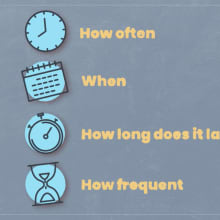
This module looks at the main problem and 'The three Ts.'

We delve into focusing questions and how to use in brief sessions.

This bonus module is packed with extra therapy demonstrations and research.

Quiz questions

We begin week two by exploring a new direction for therapy sessions.

This module focuses on reframing, giving practical examples and analogies to explain the concept.
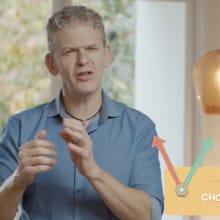
We look at the choice point in this module, with demonstrations and examples.

This module focuses on active intervention, giving practical tips and tricks to help your clients.

We delve into the nuts and bolts of brief interventions - how to set up a session.

This bonus module is packed with extra resources for further enrichment.
Quiz questions

We tackle homework in this first module of week three, and how to handle in brief sessions.

This module investigates the power of rating the helpfulness of a session, with practical demonstrations to illustrate.

We look at assessment tools, records and handouts you can use in session to help your clients.

We tackle how to work with difficult behavior in session, with practical demonstrations to illustrate.

We continue and explore what to do when a client can't decide which problem to focus on.

This optional content focuses on adaptions for Doctors.
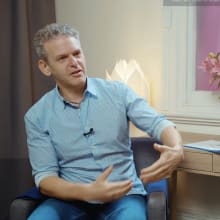
A highly practical module with demonstrates brief interventions for anxiety.

This bonus module is packed full of additional resources and research.
Quiz questions

We begin by reflecting on our own barriers to FACT as clinicians.

A highly demonstrative module which illustrates brief defusion.
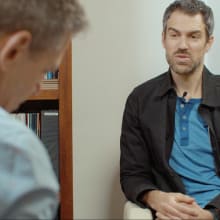
We focus on brief acceptance, with demonstrations and examples to guide the learning experience.

We look at building on foundations you've laid in previous client sessions, and learn what to focus on in subsequent sessions.

This bonus module is packed with extra research.
Quiz questions

We tackle homework horrors in this first module of the week.

Effective strategies to use in challenging sessions are demonstrated in this module.

We continue focusing on challenging sessions, looking at values and committed action.

We explore acceptance and urge-surfing in the context of challenging sessions.
A bonus module packed with further research and teaching.
Quiz questions

We look at how to be flexible in a session, learning that you don't have to stick to the script.
This module contains further demonstrations and examples to enrich your learning and aid flexibility in session.

This bonus module is packed with extra resources to enrich your learning experience.
Quiz questions and conclusion
Richard MoorePsychologist - Sydney, AustraliaLorem ipsum dolor sit amet consectetur adipiscing elit sed do eiusmod tempor incididunt ut labore et dolore magna aliqua ut
David JonesPsychologist - New York, USALorem ipsum dolor sit amet consectetur adipiscing elit sed do eiusmod tempor incididunt ut labore et dolore magna aliqua ut
Elizabeth MoorePsychologist - London, UKLorem ipsum dolor sit amet consectetur adipiscing elit sed do eiusmod tempor incididunt ut labore et dolore magna aliqua ut
Michael DavisPsychologist - London, UKLorem ipsum dolor sit amet consectetur adipiscing elit sed do eiusmod tempor incididunt ut labore et dolore magna aliqua ut
Elizabeth SmithPsychologist - Brisbane, AustraliaLorem ipsum dolor sit amet consectetur adipiscing elit sed do eiusmod tempor incididunt ut labore et dolore magna aliqua ut
Jennifer SmithPsychologist - London, UKLorem ipsum dolor sit amet consectetur adipiscing elit sed do eiusmod tempor incididunt ut labore et dolore magna aliqua ut
You don't need to be online at a specific time! You can log in and out at a time that suits you and learn at your own pace.
Once your course begins, Russ Harris will be online throughout the week to answer questions, but please allow a couple of days for your questions to be answered. The forum will be open for 3 months, allowing time to delve into the content and ask Russ follow up questions after all content has been released.
All our courses are self-paced. If you miss a week, or fall behind, don't worry. You can catch up at a time that suits you!
Each course has 12 months access, and this bonus time can be used to catch up on any missed work. You can find out when your course access finishes by looking in "My Dashboard."
If you are experiencing extenuating circumstances, you may be eligible for a deferral. Please contact us via the chat icon on the bottom right-hand corner of the website or via email at support@psychwire.com.
1. The course must be completed in full.
2. Achieve the minimum overall quiz score of 80%.
Quiz questions from the entire course are included in this overall total. The pre-test quizzes are practice only and are not included in your overall score.
You must answer questions correctly within three attempts.
3. Payment of a non-refundable $20 USD processing fee must be paid before the completion of your course.
4. Submission of a post-course evaluation form.
If you're still enrolled in a course and would like CE/CME credits, but have not paid the $20 USD processing fee, please contact us via the chat icon on the bottom right-hand corner of the website or via email at support@psychwire.com.
Please note that payment must be made before your course finishes.